Saturday, 9 November 2019

An Early Arrival - John Myers

When I began my family history journey, over forty years ago, my main aim was to trace my family back to the first arrivals in Australia. Over the ensuing years, I have been able to do that with all lines of my family, but, unfortunately, not how they all arrived! I always hoped to find an ancestor who arrived in Port Phillip before the Colony of Victoria was proclaimed (1 Jul 1851). Finally, this year I found a 4th great uncle, John Myers, who arrived in 1841 and this is his story. He was the pioneer for the family, as several siblings and their families followed in the 1850's. The breakthrough came when I purchased his death certificate, that stated at his death, 7 March 1884, he was aged 64 and had been in Victoria 40 years. The details had been supplied by his brother, Thomas, my 3 x great grandfather. This gave me a time frame to look for his arrival and that it was in the early 1840's.


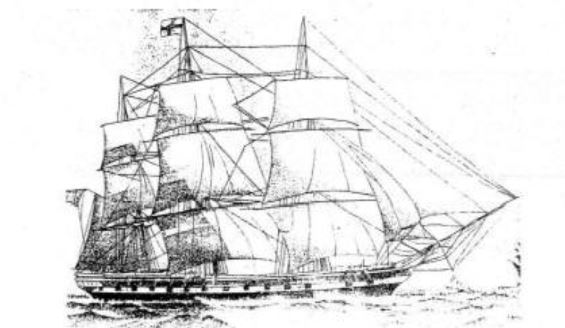
Duchess of Northumberland
Built 1834, 541 tons

I was able to find John arriving in the Colony of Port Phillip on 3 Jun 1841, as a bounty immigrant, aboard the Duchess of Northumberland , after a 107 day voyage from London via Plymouth. The Ship made history, as it carried the first mail and news from England to arrive direct to Port Phillip. Bounty Immigrants had their passage paid for them and a bounty was paid to the agent who had bought them out, but only after the immigrant had been interviewed by the Immigration Board on arrival, and deemed a suitable immigrant. A bounty, in John's case 19 pound, was paid to the agent, John Marshall. On the passenger list for the Duchess of Northumberland, John Myers(Mayers) was described as a 21 year old, Catholic, agricultural labourer from County Clare, who could both read and write. Of the 80 single males on board, 18 were from County Clare and only one of these was not a labourer, he was a carpenter. Four of the men were also accompanied by sisters. Although the steerage on the Duchess of Northumberland was described as lofty and roomy, with more than the 6 foot headroom required, it still lacked ventilation and became very stuffy on hot nights, with passengers often resorting to sleeping on deck. What tempted John to leave Clare and make this long perilous journey? 


Limerick Chronicle, 25 Jan 1840


Advertisements, like the one above from the Limerick Chronicle, 25 Jan 1840, appeared regularly in the newspapers and painted a glowing picture of Australia, at a time when the lower classes in County Clare were suffering. John was born about 1820. I have been unable to find a baptism, but, several siblings were baptised at St. Munchin's, Limerick City, a parish that straddled the Clare/Limerick border. He grew up in a time when land, food and employment were scarce for the landless labourers of Clare. In the fifty years prior to the Great Famine (1845-9), the population had doubled. The demand for Irish food had declined with the end of the Napoleonic War in 1815, so landlords began grazing cattle rather than growing crops, but continued to rent out land at the same high level the war had allowed. Landlords owned half the land in Clare, so with less cultivation, fewer labourers were needed, work became scarce and less demand for crops caused prices to fall and high rents couldn't be paid.  Potatoes, the staple food, were an unreliable crop, with partial failures in several years in the 1820's, that added to labourers' demise. This led to many violent uprisings against the landlords in the 1830's, the future looked bleak. Against this background is it any wonder that John thought he had a better future in Australia.


Melbourne c. 1840 from Surveyor-General's Yard by Robert Hoddle
State Library Victoria's Picture Collection


John arrived in Melbourne in 1841, only six years after it had been founded, the picture above gives an idea of what it was like then. I have found four mentions of a John Myers in early newspapers, but as another John Myers and family arrived in Melbourne in 1849, it is impossible to know who they refer to. However, they do give some insight into the colony at the time. A John Myers was fined on two occasions in 1849, firstly for cutting wood on crown land that wasn't included in his licence and the other for allowing five cattle to stray in the public thoroughfares of the city. The Sands & MacDougall Directory for 1860 lists a John Myers at 22 Little Lonsdale St West. There is a family story that a member of the family ran a hardware type business from a "tin shed" somewhere near where the Windsor Hotel is today. Could this have been it?

According to John's death certificate, he married in Melbourne to a Catherine Lahey(?) in 1857, but I have been unable to confirm this and there were no children. When he died in 1884, he left a will with his brother, Thomas, the sole beneficiary and executor. Thomas inherited 3 lots of land, the most substantial, 38 acres at Lakes Entrance, where John had resided until he came to Shepparton prior to his death. Perhaps the inheritance of this land at Lakes Entrance is the basis of another family story,  that Thomas wanted to move there, but his wife, Catherine considered it far to remote to do so and they remained in Shepparton. Despite John being quite specific about his land ownership at Lakes Entrance, Burn Brook and Wyndham and that the titles were with his solicitor in Melbourne, Thomas swore an affidavit for probate that only the title for the land at Lakes Entrance could be located, details of which were given in the Inventory for Probate and can be seen below. (Blocks 30A, 30D & 30E)


Department of Lands & Survey 1959, Parish of Colquhoun, County of Tambo
State Library Victoria


By coming to Port Phillip, John achieved land ownership, an impossibility for him in County Clare. He lived on a block of land at Lakes Entrance, perhaps drawn there by memories of home close to Limerick City, where the Shannon River meets the seawater of the Shannon Estuary. Finally a connection to a pioneer of Port Phillip.

Friday, 22 June 2018

A Hazard of Early Tinned Food

We have all heard many stories of the dangers faced by our ancestors coming to Australia on the early sailing ships, but this week I came across another danger faced by Francis Scammell, a bounty immigrant travelling to Port Phillip in 1841- contaminated tinned food! How could this happen? It got me researching the history of the tin can, something we take for granted today, with all of us having cans of food in our pantry.

The humble tin can is just over 200 years old and the idea of preserving food was encouraged by the French Government, in 1795, by offering a 12,000 franc prize to anyone who could preserve food to feed its far flung military. A French chef, Nicolas Appert experimented for many years, firstly with champagne bottles, something he had, sealed with cheese and lime , then wide necked glass containers which were too fragile and finally tin cans of meat which he soldered closed after heating. He watched the cans for months and those that didn't swell he deemed fit for consumption! After glowing reports about his canned food he was awarded the prize in 1809 on the condition he published his method, which he did the following year.

This tin can process was bought to England by another Frenchman, who used an agent to patent the idea, which was then sold onto Bryan Donkin who set up a business, Donkin, Hall & Gamble in Bermondsey. After successfully feeding his canned beef to nobles, who gave him glowing reports, his business took off.

An Early Tin Can

Early cans were made of tin-plated iron and very heavy. The process was labour intensive with cans made by hand. Food was heated in sealed cans for 6 hours, then opened slightly and re-soldered closed with lead solder. Preserving food in these cans was an expensive business. The main market was the British Army and the Royal Navy. By the 1820s, several expeditions to the Arctic had used canned food as well. Early cans weighed between 4 and 20lbs and as no can opener had been invented, a bayonet, hammer and chisel or a rock was advised to be used to open them!  By 1821, more manufacturers entered the field and Donkin dissolved his partnership.

As the early process of canning food was a hit and miss affair with no real understanding of the process, there were many cases of contaminated food. Louis Pasteur's development of pasteurization wasn't until 1864.

Francis Scammell left Bristol on 26 August 1841 aboard the Ward Chipman(sometimes also called Ward Chapman) and arrived at Port Phillip in mid December 1841. A shipping speculator, J P Hinton had purchased the ship and fitted it out for the voyage. He decided to use tin food, provided by John Gillon & Co, instead of the usual food loaded. The seals on the tin food were defective and much was spoilt. Even before rounding the Cape of Good Hope many of the passengers were ill and eight passengers were employed to help tend the large number of sick. By the time the ship reached Melbourne 19 children had died of food poisoning from defective cans. This was just another obstacle faced by those coming to Australia in the early days.

Monday, 11 June 2018

Numurkah 1884 - A Thriving Town

Numurkah in north east Victoria was proclaimed a town on 8 February 1875. Jeremiah McAuliffe, my great, great grandfather selected land at Katunga on the outskirts of Numurkah in January 1878. Alfred Leahy, the district's government surveyor surveyed both Jeremiah's selection and the township of Numurkah. The first sale of allotments in the town took place on 11 January 1878 and Alfred Leahy was among the first purchasers, securing five allotments at four pound each. The main street of Numurkah, Melville Street, was proclaimed a street in 1882.

Melville Street Numurkah  c1900-1910
(State Library of Victoria)

I had the basic facts about the town but I wanted to get a feel of what the area was like when Jeremiah was there and what better way than to read the local newspaper of the time. Unfortunately only a limited number of Numurkah newspapers are on Trove, so last week I made a trip to the State Library of Victoria to browse through the earliest newspaper I could find there on microfilm. I love reading the newspaper everyday, so it was far from a chore to spend the afternoon browsing through nine months worth of The Numurkah Guardian & Wunghu Observer from March to December 1884. This newspaper was the second printed in Numurkah and came out weekly, it contained advertisements, news, upcoming events and meetings, as well as a supplement containing short stories.

The same as today there were reports of road accidents and fatalities, but these involved horses, buggies and carts. An unfortunate, Mr Hanson had his leg amputated after it got caught in the wheel of the dray he was driving, when he attempted to control his bolting horse. The local state school teacher, Miss Barkley also suffered minor injuries to her knee and was severely shaken, when her horse bolted, knocked into a tree and she fell to the ground. Even the local doctor wasn't exempt from an accident:-

3 July 1884

This snippet also gives added insight into the weather at the time and the difficulties of travelling around on dirt tracks. Obviously the unpredictability of rainfall was a problem for this agricultural area as this piece shows:-


Much like today, controlling burning off was another topic of discussion. A well attended meeting of representatives from the agricultural societies of the north east region met in Murchison on 26 April to "to consider the best means to adopt for obtaining an alteration of the law relating to the use of fire or failing that, to urge the strict enforcement of the law as at present in force." This meeting had occurred because the whole district had suffered severely from fires in the previous summer. Suggestions made included not allowing burning off before the 1 March, increasing the cleared area around farms and banning farm labourers smoking in the fields. After much discussion several resolutions relating to times and notifications of burning and clearing around farms were agreed upon and were to be sent to all societies before appointing delegates to lobby the government. It came as a surprise then, when later in the year on 27 November, I found an article that the Numurkah Fire Brigade had just realized their hope of having an Engine, with the purchase of one from Benalla Brigade for 80 pound.

As expected in a new town, many new groups were formed. A popular meeting place was Gifford's Hotel, where on 21 April a meeting was held for those interested in the formation of the Numurkah Football Club with the encouragement "no more healthy or manly game can be indulged in by the young bloods of Numurkah." On 4 June, the Numurkah Rifle Club was formed with about 20 members enrolling and "it was decided to obtain a supply of Enfield rifles on loan from the government, each member to buy his own cartridges." Later in year shows a report of the Numurkah Brass Band, that had recently formed also met at Gifford's Hotel. One meeting, not held at the Hotel, was the first meeting of the The Blue Ribbon Army held at the Bible Christian Church where a good attendance was expected to hear what was to be said in favour of teetotalism! The Mutual Improvement Society debated on the subject of Bobbie Burns, the Scottish poet, the Numurkah Racing club discussed fencing in of the racecourse, the Mechanic Institute met to plan extensions to the recently built building and the annual meeting of the Agricultural and Pastoral Association was held 5 July. This Association only a few years old was ranked fourth in the State and was considered an important part of the rural community and still is today, as shown by this photo of the entrance gate taken last year.


Another reason for Numurkah's expansion was the coming of the railway in 1881. There were many articles throughout 1884 about the importance of the railway as it was where all the north-east wheat harvests were bought to be transported. However, there was much lobbying for the railway to be extended and finally on 2 October this was reported in the paper:-


Many were apprehensive that it might lead to a decline in business for Numurkah if the new Railway Bill was passed as fewer people would need to come there now. Some also wondered why improvements had been made to the station, as they might not have been necessary.

Reading the local paper certainly gives you an insight into what was happening and the concerns and interests of the inhabitants at the time. To finish on a lighter note this advertisement caught my eye and gives an insight into decorating tastes:-